In modern pharmaceutical manufacturing, dosage accuracy and consistency are critical to patient safety and regulatory compliance. The Capsule & Tablet Sampling Checkweigher plays a key role in In-Process Quality Control (IPQC) by enabling high-precision weight verification of dosage forms.
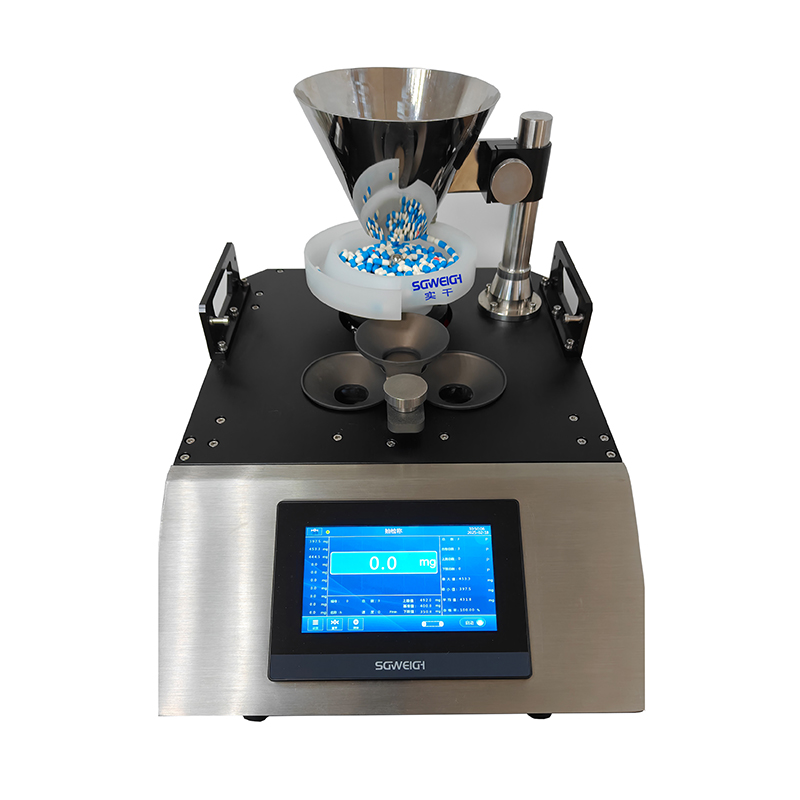
This white paper explores:
Why sampling checkweighing is essential
Key technologies behind high-precision systems
Regulatory requirements (GMP / FDA / USP)
Comparison with global leading solutions
Future trends in smart pharma manufacturing
Uniformity of dosage units is a fundamental requirement in pharmaceutical production.
According to the United States Pharmacopeia (USP) and European Medicines Agency (EMA):
Each dosage unit must fall within defined weight or content limits
Deviations may lead to under-dosing or overdosing risks
◆ Even minor weight variation (±1–2 mg) can significantly affect low-dose drugs
A Capsule/Tablet Sampling Checkweigher is a precision instrument used to:
Randomly sample products during production
Measure individual or batch weight
Perform statistical analysis for compliance
Unlike full-line systems, it is used in:
IPQC (In-Process Quality Control)
Laboratory verification
Process validation
3.1 Electromagnetic Force Restoration (EMFR)
High-end systems (similar to those from Mettler Toledo) use EMFR technology:
Converts mass into electromagnetic force
Enables ultra-high resolution (up to 0.1 mg)
3.2 Vibration & Environmental Compensation
Anti-vibration design
Temperature drift correction
Airflow shielding
◆ Critical for stable results in production environments
◆ This allows real-time evaluation of process capability and stability
4.1 GMP (Good Manufacturing Practice)
Defined by the U.S. Food and Drug Administration (FDA):
Requires consistent product quality
Mandates in-process controls
4.2 21 CFR Part 11
Electronic records & signatures
Audit trails
Data integrity
4.3 EU Annex 11
Computerized system validation
Secure data management
| Criteria | Sampling Checkweigher | Inline 100% Checkweigher |
| Inspection Type | Statistical | Full inspection |
| Accuracy | 1 mg | 0.5 mg |
| Speed | 3600 pcs/h | 300,000+ pcs/h |
| Use Case | IPQC / Lab | Production line |
 |  |
◆ Both systems are complementary, not competing
✔ Improved Product Quality
Early detection of process deviations
✔ Regulatory Compliance
Meets global pharmacopeia standards
✔ Reduced Risk
Prevents batch rejection and recalls
✔ Data-Driven Manufacturing
Enables trend analysis and process optimization
7.1 Smart Pharma & Industry 4.0
Integration with MES / SCADA
Real-time monitoring dashboards
7.2 AI-Based Quality Prediction
Predict weight deviation trends
Prevent defects before occurrence
7.3 Fully Automated Sampling Systems
Robotic sample collection
Reduced human intervention
The Capsule & Tablet Sampling Checkweigher is no longer just a quality control tool—it is a critical component of modern pharmaceutical manufacturing systems.
With increasing regulatory scrutiny and demand for data integrity, manufacturers must adopt:
High-precision weighing technology
Fully compliant data systems
Intelligent statistical analysis
◆ Companies aligning with these standards will gain a competitive advantage in global pharma markets.